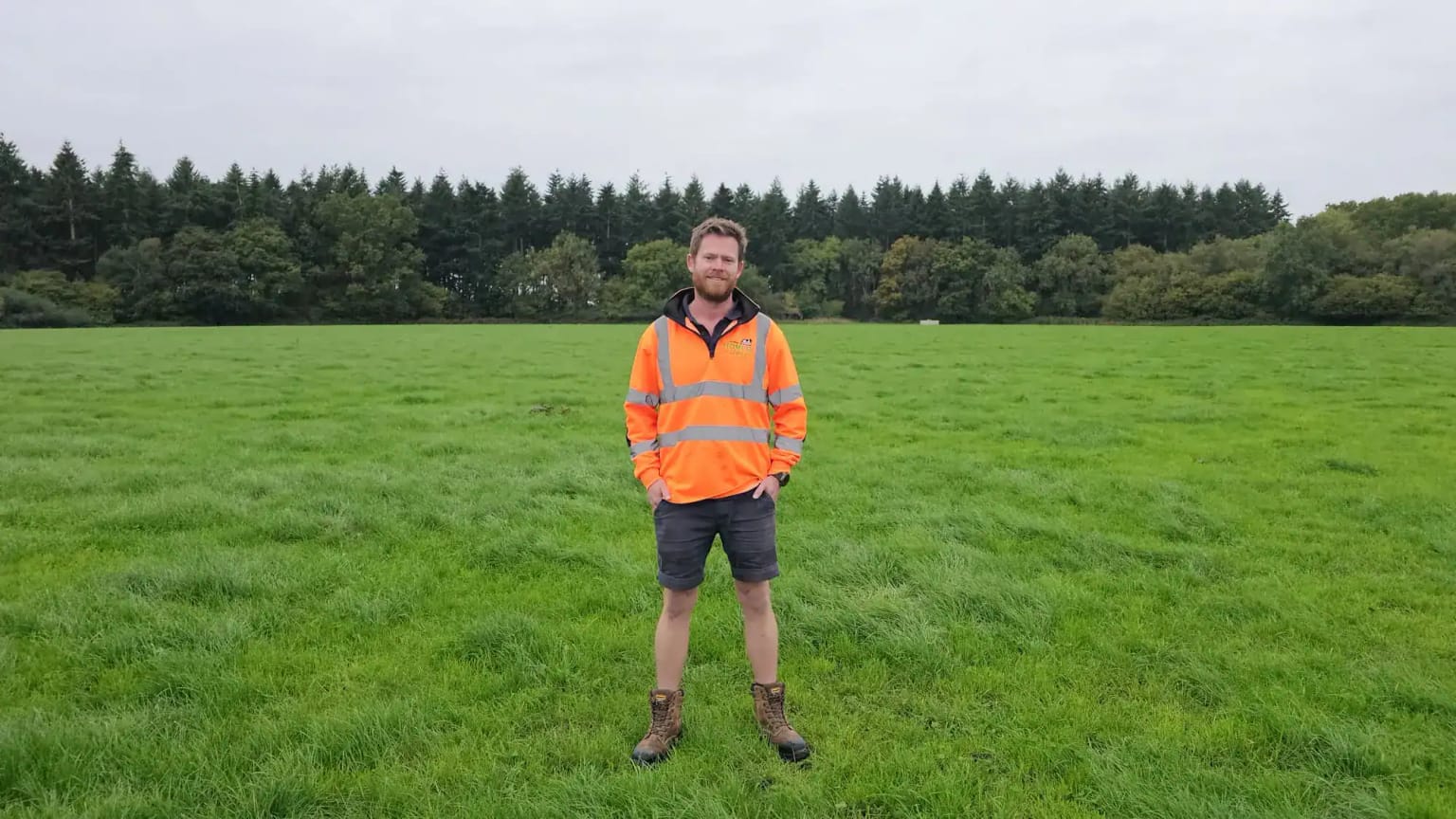

Geoff Homer
Marlborough, United Kingdom
This story was filmed in 2025 and reflects one farmer’s own experience with their Tow and Fert. Every farm is different, so please treat it as a story rather than a forecast for your place.
“I can melt urea through this at 70p a litre”: Geoff Homer on foliar, arable and rethinking the jigsaw
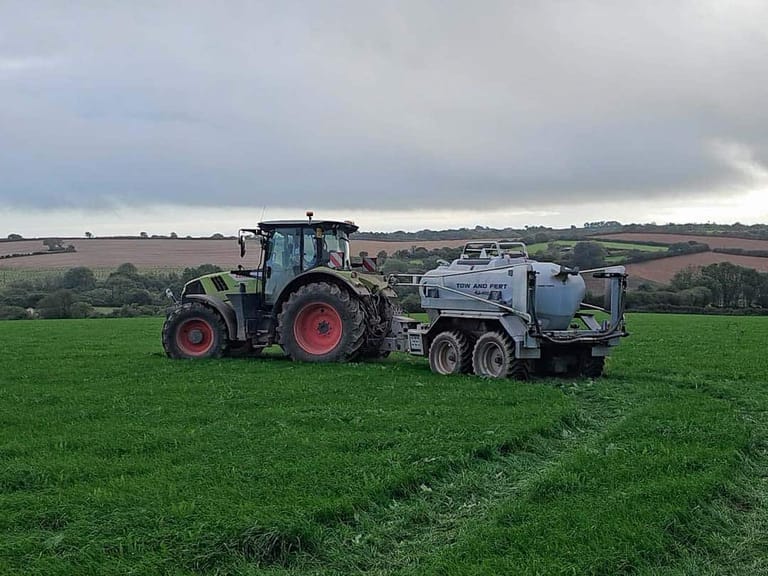
Geoff Homer had already moved his herds from solid nitrogen to liquid-applied N before he brought in a Tow and Fert. He’d tried foliar application through his own sprayer before that and found it didn’t work well on grass, the only product suited to it was a slow-release polymer urea, and an expensive one at that.
“It doesn’t work with grass because it’s so slow releasing. But then you’re buying a polymer urea at £2.10 a litre. I can melt urea through this at 70p a litre.”
That cost difference, and being able to melt ordinary urea rather than rely on a polymer product, is what brought him to the machine. He also rates foliar well ahead of granular and liquid soil-applied nitrogen on how much of what he spends actually gets used, based on running all three on his own farm rather than a trial he’s citing:
“Granular soil applied, you’re at 50 to 60% at best. Liquid soil applied, you’re at 70%. You go to foliar applied, you’re in the 90s. If I can use 90 to 95p of every pound I spend rather than 50p, it’s a no-brainer.”
Geoff runs the Tow and Fert alongside a cyclone topper, an Aerworx, and grass and break-crop mixes chosen for his dry area, so the following reflects his whole system.
He describes last season, a difficult one weather-wise, as the year his nitrogen use dropped sharply across two of his herds:
“We’ve dropped it by two thirds, and not even used an artic load of bagged urea through the Tow and Fert.”
When growth dropped off in a dry spell, this is how he describes what happened:
“I think we were lucky, because of having the Tow and Fert. It just helped a little bit of growth when it was starting to really dry up. Keep it green, keep a bit of growth there. We had growth last week of over 80, and average farm covers have grown from just over 2,000 to just under 2,800.”
Once the main growing season passes, the machine’s job on his farm changes shape entirely, moving from foliar applier to a bowser for the drill, mixing seed drenches and brews before they go out. Later in the year it stays in the yard altogether.
Thinking about Tow and Fert?
Talk with a specialist
Tell us about your operation and we’ll match the right model and setup for you.
“The Tow and Fert just stays in the yard, becomes a stationary mixer. Make our own mixes up, and we can put whatever we want. Doing sap and tissue analysis on the arable plants. If we need something else, we put that trace element in with the mix.”
On the wheats, he ran a fungicide mix through the machine and into the sprayer at a low nitrogen rate across four passes:
“We finished the year with milling wheats on 160 kilos soil applied and 20 kilos from the Tow and Fert, and we’ve got twelve and a half to thirteen point two proteins. Very happy. Can’t complain at that.”
Asked what the return on investment has looked like, Geoff reckons the machine paid for itself quickly:
“I would have thought it’s probably paid for itself in one, well, in the first 12 months. The fertiliser saving I mentioned earlier, yes, we’ve been in a drought. But that’s just on the two farms, let alone the third farm, which has got the big arable block on the side as well.”
He’s upfront that not everything shows up that fast, though. The soil health side, he says, is a longer game:
“We’ve got soil health benefits that, how do you put a value on that? You’re not gonna see it in this first year. It’s gonna come. We’ll be seeing it in five years, six years, ten years time. The more we do it, the more benefits we get, and yeah, soil just responds.”
He’s noticed the ground itself behaving differently, needing a trowel rather than a spade now it’s friable, and he puts the way his grass has come through dry spells down to the same thing: “That’s how the grass has responded the way it has on the grazing platforms.”
Geoff talks about all of this as pieces fitting together rather than any single input doing the work alone, the Tow and Fert alongside a cyclone topper, an Aerworx, and reworked grass and break-crop mixes built for a dry area. He puts the mindset behind it plainly:
“That’s probably the biggest bit of the jigsaw, is having a mindset change that allows you to think differently, go against the norm, go against what other generations have done and just not be scared to have a go.”