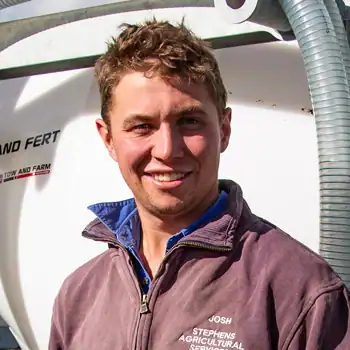
Josh Stephens
Camperdown, VIC, Australia
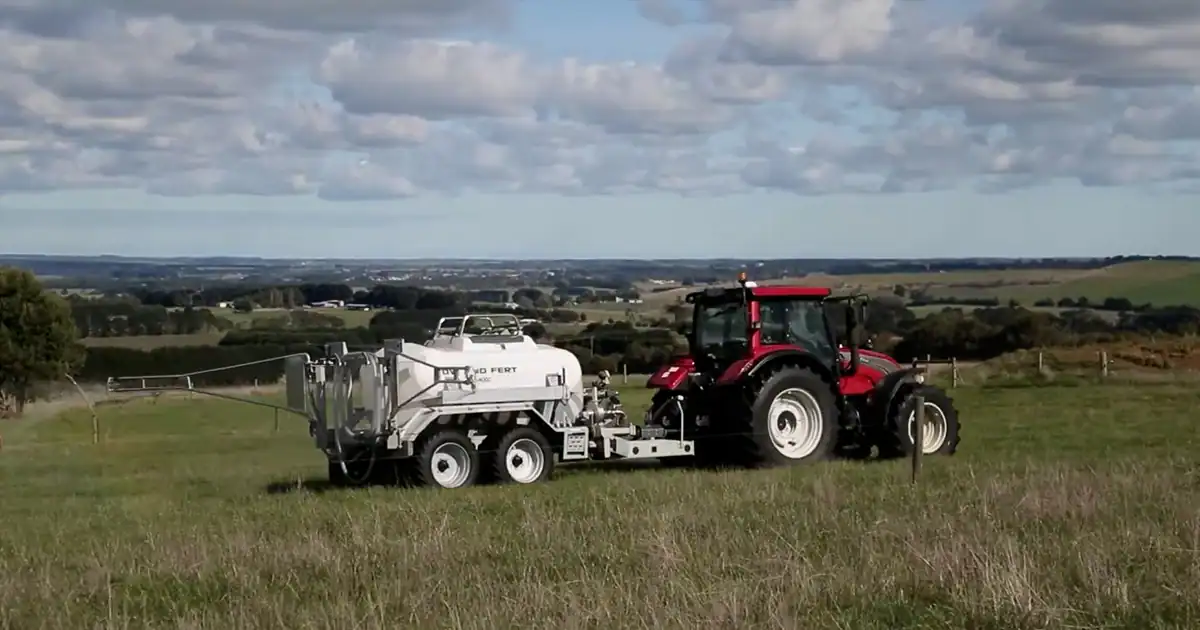
This story was filmed in 2022 and reflects one farmer’s own experience with their Tow and Fert. Every farm is different, so please treat it as a story rather than a forecast for your place.
From Skeptic to Game Changer.
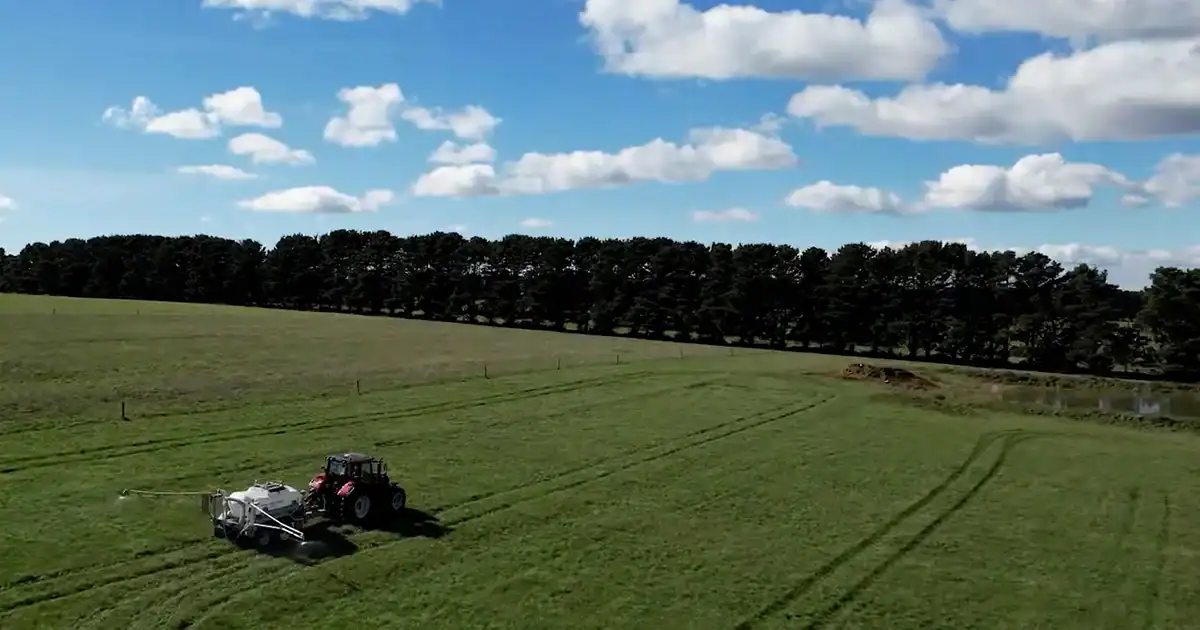
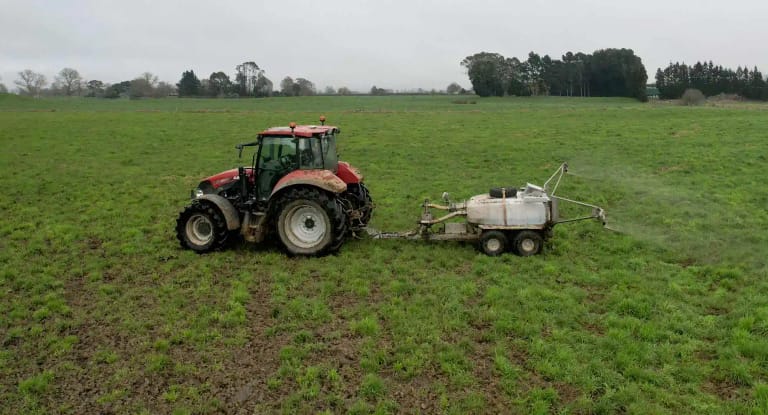
Josh Stephens runs a 900 acre dairy farm milking around 430 cows near Camperdown, Victoria, and also contracts Tow and Fert application to farmers across the region, from fully organic operations to conventional ones, and everything in between.
Josh’s own journey with reducing nitrogen started before he had the tool to do it properly. On a leased property, the previous farmers had been spreading 120 kilograms of urea. Josh pulled that back to 100, sensing that was closer to where the farm needed to be, but knew a bigger change was coming.
“We had to drop that significantly… and that’s when I looked into these. We started going 70, back to 50, and then back to 40 kilos of N or urea. That’s when we hit our jackpot, our happy medium.”
That happy medium wasn’t just about urea. It became a broader system, mixing in microbes, lime, clover and rape, and finding it worked especially well on stony country that had been difficult to manage with any other approach.
As urea rates dropped, Josh noticed something he hadn’t expected: grazing cycles stretched out.
“We were going once a month, for example, and I reckon we were going a month and a half, just because we got that extra. With using less urea, the grass had a better root mat, and we were always getting longer grazing out of it.”
Josh points to better clover cover as one of the clearest changes, something he believes gets overlooked in high-urea systems.
“I think that high number of urea getting spread, breaking it down, destroys a lot of the clovers, and I don’t think anyone really thinks about it, but it does. We find that we’ve got a lot better mat of clover around the farm, and cows enjoy that a lot better than the conventional grass.”
Thinking about Tow and Fert?
Talk with a specialist
Tell us about your operation and we’ll match the right model and setup for you.
Josh first brought a Tow and Fert onto the farm during the dairy crisis, when money was tight and production had hit rock bottom. Cutting urea usage while still protecting grass growth turned out to support the bottom line rather than threaten it. “With lowering that urea, but still being able to get that big grass result, it helped the bottom line [by keeping us] productive. You can’t do one without the other, but you’ve got to stop the urea usage before you get into that bottom line figure.”
Seven years and a second machine later, Josh now runs a Tow and Fert contracting business alongside his own farm, covering an area from Port Fairy through to Colac and Simpson. His client base spans the full spectrum, from farmers running long-established microbial brews to conventional operators still applying 100 kilos of urea a pass.
Convenience is a big part of the appeal for his contracting clients. Instead of arranging separate passes for herbicide, fertiliser and lime, or bringing in more than one contractor, Josh can combine it all in a single job.
“You don’t have two contractors coming in for the one job, like we can come in with this, spray MCPA, your Gibb and your urea, bit of lime. I find that they’ll put a lot more, they might do a couple more rounds, and they’ll probably put more Gibb on and more lime than they would have if they’d just been spreading it conventionally.”
Day to day, Josh says the machine simply makes the job faster and easier to run.
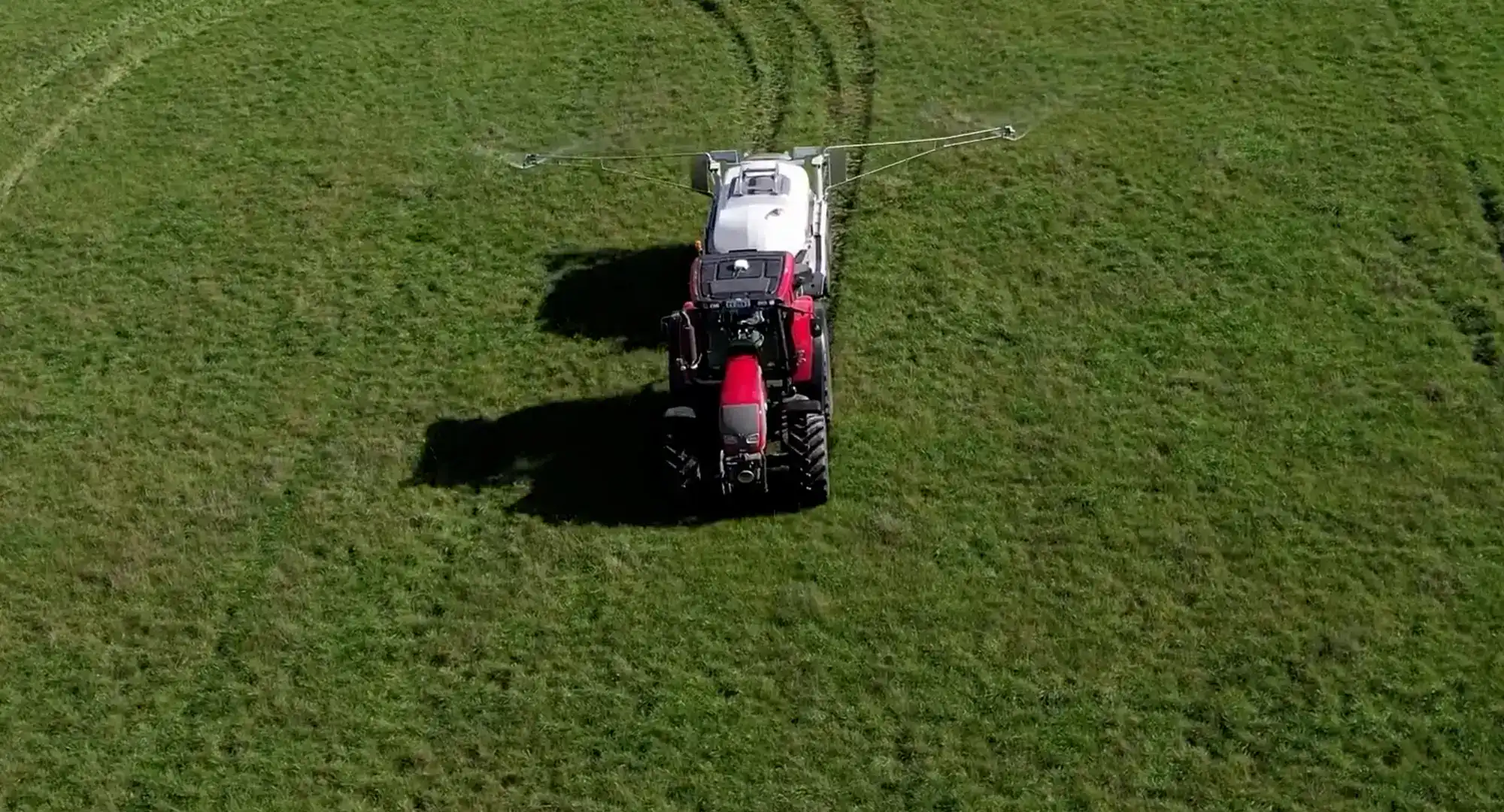
“Just being able to jump in the paddock, chuck our urea in. Getting into the tanks, pumping it out straight away, putting the urea in, putting your Gibb, being able to mix it all in one, nice and easy, ready to use. By the time you get down the paddock, she’s right to go, put your nozzle size in, put it into the GPS, and away you go.”
Josh is candid that he came to foliar application from a place of scepticism, and that his view changed once he saw the results for himself, on his own ground and across the farms he contracts to.
“I wasn’t a big skeptic of the soil, but you change your mind when you see how well it works. The Tow and Fert is the way of the future, and foliar spray… Foliar spray can change a business and change farmland, in a big way.”